- Region
- Águilas
- Alhama de Murcia
- Jumilla
- Lorca
- Los Alcázares
- Mazarrón
- San Javier
-
ALL AREAS & TOWNS
- AREAS
- SOUTH WEST
- MAR MENOR
- MURCIA CITY & CENTRAL
- NORTH & NORTH WEST
- TOWNS
- Abanilla
- Abarán
- Aguilas
- Alamillo
- Alcantarilla
- Aledo
- Alhama de Murcia
- Archena
- Balsicas
- Blanca
- Bolnuevo
- Bullas
- Cañadas del Romero
- Cabo de Palos
- Calasparra
- Camping Bolnuevo
- Campo De Ricote
- Camposol
- Canada De La Lena
- Caravaca de la Cruz
- Cartagena
- Cehegin
- Ceuti
- Cieza
- Condado de Alhama
- Corvera
- Costa Cálida
- Cuevas De Almanzora
- Cuevas de Reyllo
- El Carmoli
- El Mojon
- El Molino (Puerto Lumbreras)
- El Pareton / Cantareros
- El Raso
- El Valle Golf Resort
- Fortuna
- Fuente Alamo
- Hacienda del Alamo Golf Resort
- Hacienda Riquelme Golf Resort
- Isla Plana
- Islas Menores & Mar de Cristal
- Jumilla
- La Azohia
- La Charca
- La Manga Club
- La Manga del Mar Menor
- La Pinilla
- La Puebla
- La Torre
- La Torre Golf Resort
- La Unión
- Las Palas
- Las Ramblas
- Las Ramblas Golf
- Las Torres de Cotillas
- Leiva
- Librilla
- Lo Pagan
- Lo Santiago
- Lorca
- Lorquí
- Los Alcázares
- Los Balcones
- Los Belones
- Los Canovas
- Los Nietos
- Los Perez (Tallante)
- Los Urrutias
- Los Ventorrillos
- Mar De Cristal
- Mar Menor
- Mar Menor Golf Resort
- Mazarrón
- Mazarrón Country Club
- Molina de Segura
- Moratalla
- Mula
- Murcia City
- Murcia Property
- Pareton
- Peraleja Golf Resort
- Perin
- Pilar de la Horadada
- Pinar de Campoverde
- Pinoso
- Playa Honda
- Playa Honda / Playa Paraíso
- Pliego
- Portmán
- Pozo Estrecho
- Puerto de Mazarrón
- Puerto Lumbreras
- Puntas De Calnegre
- Region of Murcia
- Ricote
- Roda Golf Resort
- Roldan
- Roldan and Lo Ferro
- San Javier
- San Pedro del Pinatar
- Santiago de la Ribera
- Sierra Espuña
- Sucina
- Tallante
- Terrazas de la Torre Golf Resort
- Torre Pacheco
- Totana
- What's On Weekly Bulletin
- Yecla


- EDITIONS:
Spanish News Today
Alicante Today
Andalucia Today
article_detail
Date Published: 23/02/2026
Bird numbers soar back in Doñana after welcome winter rains
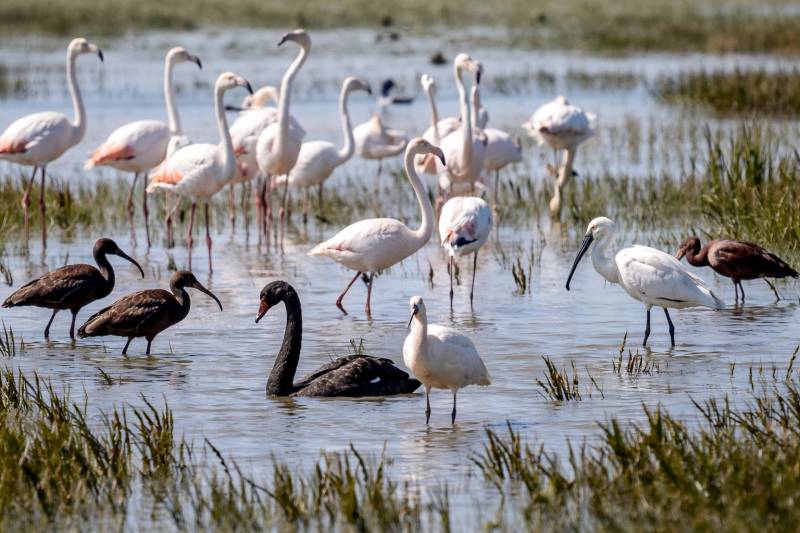
More than 385,600 waterbirds counted as marshlands show clear signs of recovery
After several difficult years marked by drought, there is finally some encouraging news from Doñana. This winter, more than 385,600 waterbirds have been recorded in the Doñana Natural Area and surrounding Guadalquivir marshes, signalling a clear rebound in birdlife.The latest International Waterbird Census, carried out by the Bird Population Team of the Environmental Monitoring Group at the ICTS-Doñana and confirmed by the Doñana Biological Station, counted 385,649 birds across 88 species. While still below the long-term average of around 437,000 recorded since 2004, the figure marks a strong improvement on the historic lows seen in the past two years.
Heavy rains earlier this year helped to refill the marshlands and aquifer, offering the first real signs of ecological recovery. Those improved water levels now appear to be directly reflected in the return of wintering birds.
Researchers use a combined methodology of aerial surveys, vehicle counts and roost monitoring to ensure the entire wetland area is covered accurately. Although the 2026 total does not reach the 1989 peak of more than 684,000 birds, recorded under a different counting system, the upward trend is clear.
Several species have responded particularly well to the wetter conditions. The common spoonbill has seen one of the most striking increases, with 120,970 individuals counted, more than 65,000 more than last year. The common pochard (a diving duck) has also recovered to 10,600 birds. Even the greylag goose has risen slightly to around 3,700, though still far below the 80,000 seen in the 1980s and early 2000s.
Rare winter visitors have also made an appearance. The black stork reached 113 individuals, underlining Doñana’s importance as one of the few key wintering sites for the species in Europe. The glossy ibis climbed to 14,900 birds, while 2,200 Eurasian spoonbills were recorded. Remarkably, 32 squacco herons, a species that normally winters in Africa, were also counted.
Rubén Rodríguez of the monitoring team said, “The evolution of waterfowl confirms that Doñana responds immediately when water is available. The recovery of the marsh is essential for the conservation of species of high ecological value and for maintaining the role of this area as one of the most important wetlands in Europe.”

Last autumn was already described as a remarkable year for waterfowl in Doñana, pointing to improving conditions in the wetlands.
For residents and nature lovers alike, the message is a hopeful one. When the water returns, so do the birds.
Loading
See more news about animals in Spain:
OR
Sign up for the Spanish News Today Editors Roundup Weekly Bulletin to get a comprehensive email with all the week’s news for Spain, Murcia, Alicante and Andalucía.
Get a sneak peek – here are a few of our recent Subscription Bulletins:
Discount Special Offer subscription:
36.95€ for 48 Editor’s Weekly News Roundup bulletins!
Please CLICK THE BUTTON to subscribe.
Contact Murcia Today: Editorial 000 000 000 /
Office 000 000 000