







- EDITIONS:
 Spanish News Today
 Alicante Today
 Andalucia Today
Spanish News Today Editors Roundup Weekly Bulletin Jan 30
TOP STORIES: "Major wind damage and snow drifts in Spain's series of deadly storms this week" & "Confidence in trains has been shaken after the Adamuz tragedy"
We finally made it to the weekend, but what an uphill battle it was, especially if you wereout and about during those intense periods of wind that struck midweek! Virtually the whole country was subjected to blowy squalls, plus dramatic scenes of snowy chaos in Madrid and central Spain and flooding in parts of Andalucía... the list could go on and on.
Plus, in this week’s edition of the Editor’s Roundup Weekly Bulletin, an update on the train situation from last week, and a mix of WhatsApp, bullfighting, scooter-riding and Ryanair news. All this and more, below:
Caution to the wind
Well, that was some wind we had this week, eh? We went into this final week of January already exhausted by bad weather, and things only escalated from there. Even before Storm Joseph was officially named, parts of Spain were being battered by extreme winds.
As early as last Sunday, Almería took a serious hit, with gusts in the inland town of Alcolea reaching an astonishing 180kmh! Other parts of the province recorded winds well over 90kmh, while along the coast gale-force winds combined with waves up to five metres high kept the entire coastline under orange alert.
Storm Joseph officially arrived in Spain from the Atlantic on Monday, becoming the third major storm to affect Spain in as many weeks. Heavy rain spread across much of the mainland, with snow falling in higher areas, strong winds in many parts and rough seas on the coast. Galicia bore the brunt early on, of course, particularly Pontevedra, which was placed under a rare red alert as rainfall was forecast to exceed 120 millimetres in just 12 hours.
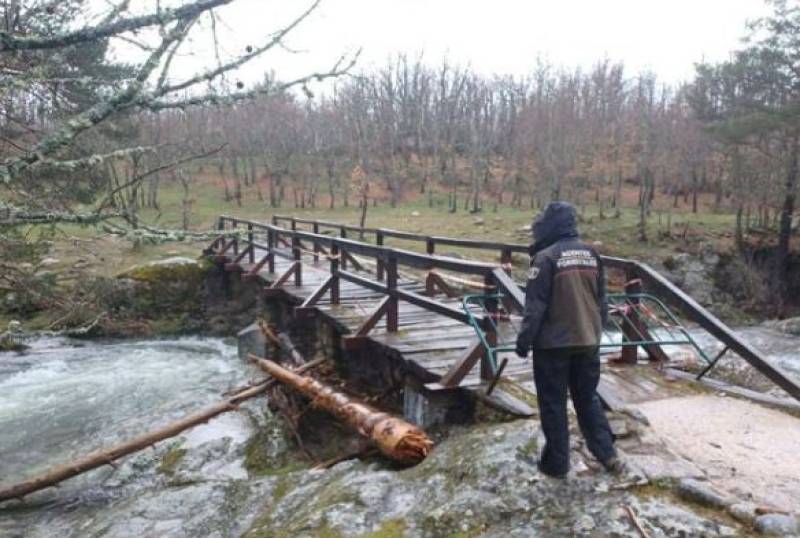
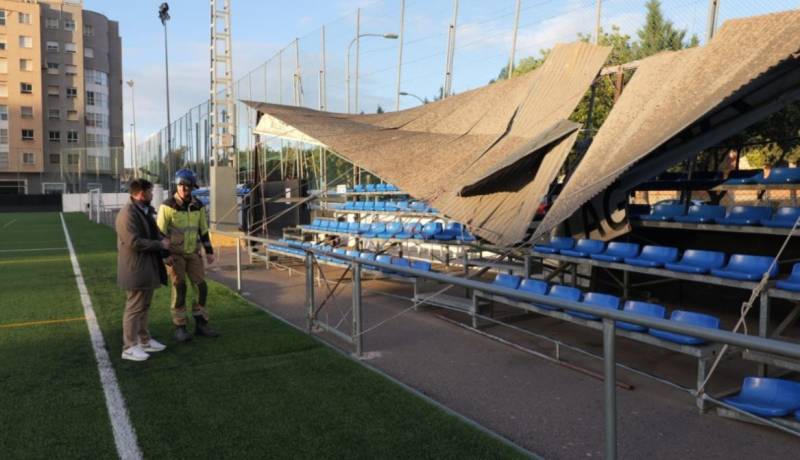
By Tuesday, Joseph’s impact was being felt much further south and east. In the Region of Murcia, fierce winds triggered more than 150 emergency incidents in a single day. Cartagena was worst affected, with collapsing structures, falling railings and even part of the Ciudad Jardín football stand giving way, though thankfully no one was hurt. Roads were blocked by fallen trees, parks and sports facilities were closed and councils scrambled to put preventive measures in place as yellow and orange alerts remained active.
Andalucía had a particularly tough time. Nearly 1,000 incidents were recorded across the region as Storm Joseph pushed through, most of them related to high winds. Tragically, on Tuesday afternoon a woman lost her life in Torremolinos after being struck by a falling palm tree during strong gusts.
Conditions worsened on Wednesday, and the Junta de Andalucía took the decision to suspend face-to-face classes in schools in 77 municipalities across Almería, Málaga and Cádiz. Orange alerts covered the entire region, while inland Almería was placed under a red alert. Rising river levels in parts of Cádiz and Málaga due to heavy rain led to precautionary evacuations near the Guadarranque river, while other residents were urged to stay indoors and avoid unnecessary travel.
But just as Storm Joseph began to ease, there was barely time to catch a breath. Storm Kristin followed immediately, bringing another round of heavy rain, snow and extremely strong winds. Wednesday proved to be the most difficult day, with weather warnings in force across almost the entire country.
Red alerts were issued in parts of Almería and Extremadura due to wind gusts of up to 130kmh, with some forecasts warning they could reach 150kmh in exposed areas. Snow caused chaos on inland roads, particularly in Castilla y León and around Madrid, where dozens of roads were affected and vehicles were left stranded. Authorities repeatedly urged people to stay at home if possible and avoid unnecessary journeys.
❄️⚠️ Circulación complicada por nevadas en los corredores cercanos a Madrid.
— Ministerio Transportes y Movilidad Sostenible (@transportesgob) January 28, 2026
❗️ Se ruega dejar despejado el carril izquierdo para facilitar el trabajo de las quitanieves.
Antes de realizar cualquier desplazamiento por carretera, consulta los perfiles oficiales.
ℹ️ @DGTes. https://t.co/4U0vnjCLJJ pic.twitter.com/dE63Fw0PGE
Now, by the end of the week, conditions are finally beginning to calm. This Saturday is expected the most stable day we’ve seen in some time. The worst of the wind has passed now and snow levels are on the rise. Still, get ready for yet more rain and thunderstorms in the days ahead as we go into next week and the month of February!
For more weather news go to our Weather & Climate page or follow the Spain Weather Watch Facebook group for regular updates
Train of thought
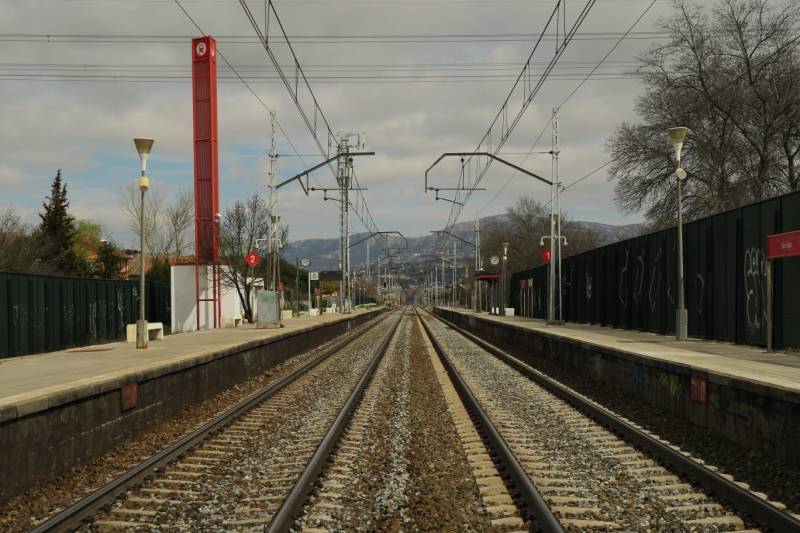
Following up from the series of horrendous train accidents that marked a sombre week for Spain last week, and about which we wrote so much in our last edition, there were continued incidents and disruptions across the country this week, albeit to a lesser extent. These issues have put intense pressure and scrutiny on the entire system and rail officials following the deadly train crash near Adamuz in Córdoba province.
Since that tragedy, where 45 people lost their lives and 152 were injured, and further incidents in Cartagena, Asturias and on the Rodalies network in Cataluña, the country is embroiled in a difficult and heated conversation about the state of the country’s rail infrastructure.
On the Rodalies rail service, further infrastructure faults this week have continued to cause cancellations and delays, and as the disruption continues attention has turned, as it will, to responsibility at the top.
Just one week after the Rodalies incident, senior officials began to resign, including Josep Enric Garcia Alemany, the Director of Rodalies, and Raúl Miguez, Director of Maintenance at Adif, the railway infrastructure administrator. For some critics, however, these departures have not gone far enough, and calls have been made from several quarters for Transport Minister Óscar Puente to resign.
In the middle of all this, some progress has been made on one of the most closely watched issues since the Adamuz crash: judicial approval has now been granted for urgent repair work on the section of track damaged in the derailment, clearing the final legal obstacle that had been delaying reconstruction.
Óscar Puente confirmed that Adif has received authorisation to begin replacing the affected infrastructure. The work is expected to take around 10 days, with the aim of reopening the full Madrid-Andalucía high-speed line around Friday February 6, following an interruption of roughly three weeks.
Once repairs are completed, the high-speed services operated by Renfe, Iryo and Ouigo are expected to return to the full Madrid-Seville route. While the investigation into the causes of the crash remains ongoing, restoring this vital corridor is seen as an important step, particularly given its role in long-distance travel and regional connections.
However, even as they work to restore services, questions remain about confidence in the rail system overall. In the days following the Adamuz tragedy, many people across Spain have been rethinking how safe they feel when travelling by train.
A new survey by DYM, a Spanish research company specialising in social and political opinion polling, suggests that while trains are still trusted by many, confidence has clearly been dented. Around half of the people surveyed continue to see trains as a safe way to travel, despite recent accidents and ongoing disruption on several high-speed routes. However, more than a third of respondents, 34.9%, now say they feel less confident about taking the train, while 13.6% were unsure or did not give an answer.
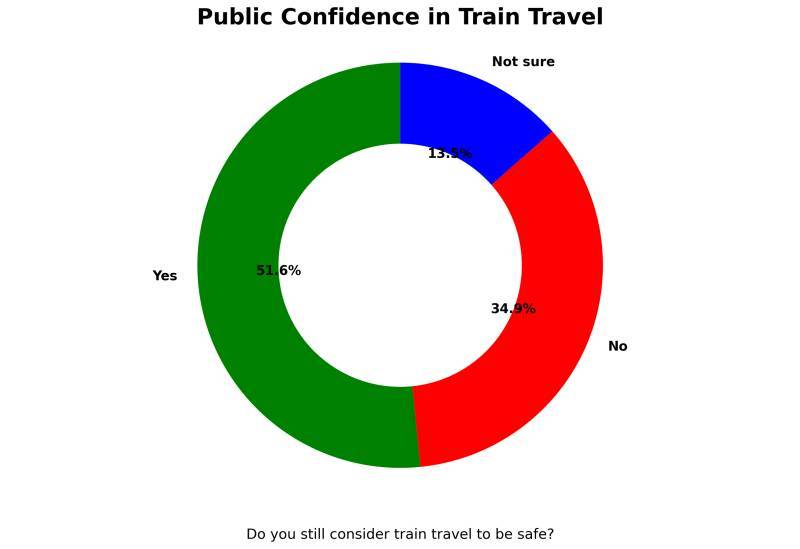
The survey, carried out on January 23 and 24, shows just how closely people have been following developments. More than 83% of those questioned said they had followed the crash reports closely. Two out of three people surveyed believe that Spain’s rail infrastructure is not properly prepared for the volume of traffic it currently carries.
Spain’s rail system still has a long way to go to heal the wounds that continue to be opened and to bring the infrastructure back to perfection, not to mention restore public confidence in train travel. Along with everyone else in the country, we will be watching closely in the weeks ahead to see how things progress.
Murcia
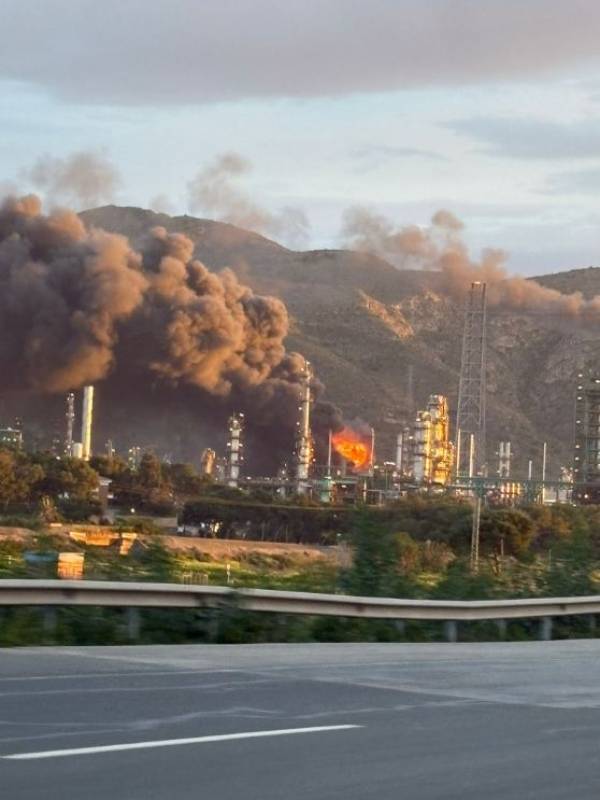 As well as the dramatic episode of winds this week, Murcia had its own scare in the form of a fire at the Repsol refinery in Escombreras, Cartagena. On Monday evening, a fire broke out in one of the older crude oil distillation units, sending a thick column of black smoke into the sky that was visible across the valley.
Repsol activated its emergency protocols immediately and its own fire crews had the blaze under control within an hour, with the fire fully extinguished later that night. No one was injured and there was never any real danger of the fire spreading, despite the windy conditions, but as a precautionary measure nearly 30,000 residents in places like Alumbres, La Unión and Portmán received ES-Alert messages advising them to stay indoors until the toxic smoke had drifted away.
Earlier that same day, Murcia city centre had already been shaken by a very different and deeply distressing incident. In the heart of the Plaza del Cardenal Belluga, a firefighter attempted to set himself on fire during what appeared to be a protest about working conditions.
Shouting through a megaphone and holding an axe, he claimed firefighters were being forced to work in unsafe conditions before dousing himself in petrol and setting it alight. Thanks to the quick reaction of local police, who used fire extinguishers to put out the flames, the situation was brought under control within moments.
The man was injured but survived and was treated by fellow emergency crews, while the City Council later confirmed a confidential disciplinary process had been opened, but quite apart from disciplining the man they should probably inquire into his mental health and maybe think about addressing some of the issues that would lead him to take such drastic action?
Also this week, as of Thursday facemasks are no longer required in hospitals and health centres across Murcia. The temporary rule, which was introduced back in December due to rising respiratory infections, was lifted as flu and Covid levels dropped back to low and stable levels across the region.
Along the coast, there was a sad story from La Manga del Mar Menor on Wednesday evening when the body of a 73-year-old Belgian man was found washed up on Playa Chica. He had gone out windfoiling earlier on the Mar Menor in the day, likely due to the windy weather that he thought would be perfect for watersports, but then disappeared.
He was later reported missing by relatives and a coordinated sea and land search was launched, and police soon located him and his equipment on rocks along the strip. Rough seas made access difficult, and by the time the Guardia Civil were able to recover his body, it was too late.
Thousands of farmers in the Region of Murcia staged large-scale protests this Thursday, bringing tractors and trucks onto major highways to demand urgent action from European, national and regional authorities.

Organised by COAG, Asaja and UPA, the demonstrations highlighted concerns over water shortages, proposed well closures, CAP subsidy cuts, trade agreements with third countries and a lack of support for young farmers and the livestock sector.
Around 3,000 vehicles took part, with key blockages on the A-7 and A-30. Farmers also distributed 20,000 kilos of local fruit and vegetables in Murcia to underline the quality of regional produce.
Elsewhere, there has been another heads-up given this week about more loud noises in the skies over Murcia as the military jets come back to carry out more of their tactical training flights in the coming week as part of a programme run from Albacete Air Base.
As has happened during previous training sessions, when the authorised fly at supersonic speed, sonic booms are created that can sound like a loud explosion and can be scary if you’re not expecting it or don’t know what it is. However, they have been restricted to certain hours in the afternoons, to cause the least disruption possible.
And finally, San Javier had its own plane news this week when tourism bigwigs in the town confirmed the 2026 Air Show will take place from May 1 to 3 in Santiago de la Ribera, alongside a packed programme of cultural events. Always a popular event, and one to pop in your calendar for later in the year!
In the meantime, if you’re looking for something to do in the nearer future, remember you can always check out our EVENTS DIARY:
Spain
Brace yourself for pricier flights to and from Spain. Ryanair’s just dropped the news that air fares could jump by as much as 9% this year, up from their earlier 7% forecast back in November.
It's all down to booming demand, they say, with 47.5 million passengers squeezed onboard between October and December alone, thanks to packed Christmas, New Year and half-term getaways. Ryanair is now aiming for a whopping 208 million flyers this year and an incredible 300 million by 2034.
Boss Michael O’Leary is confident that his new Boeing 737 Max 10 jets, packing 21% more seats and sipping less fuel, will land on schedule from spring 2027, despite recent production woes and strikes at Boeing.
Great for shareholders, maybe, but a wallet-wince for us sun-seekers hunting bargain breaks to the Costa del Sol or beyond.
 For those scooting along on the ground, Spain’s new electric scooter rules are now properly in force. As of Monday January 26, the DGT ended the long transition period, bringing in compulsory civil liability insurance for heavier or faster models: anything over 25kg or capable of topping 14kmh. Lighter, slower scooters stay exempt for now, pending a full national registry.
Affected riders must carry insurance covering third-party injuries or face some potentially hefty fines. These could be anything from €200 to €1,000 for rule-breakers, so double-check your scooter’s specs before heading out.
No registration or plates required yet, but a circulation certificate looms for all: pre-21 January 2024 models get until 2027.
With e-scooter use exploding and accidents on the rise, this brings clarity for riders zipping through city centres and pedestrians watching their step on shared pavements from up in Barcelona to down south in Seville.
WhatsApp, Spain’s go-to messaging app for its 30 million users, could soon be trying to tempt you with a paid ad-free upgrade. It’s following Meta’s playbook from Facebook and Instagram, where optional subscriptions run about €5.99 a month across Europe.
But don’t worry: your everyday chats, photos and voice notes with family and mates stay completely free forever. Ads might pop up in Status updates and Channels though, so for those who fancy uninterrupted scrolling and fancy AI tools, a premium option makes sense.
Since its 2009 launch and Meta’s 2014 takeover, when they ditched the tiny yearly fee, WhatsApp’s been gratis at heart and will stay that way (for now!). There’s no confirmed launch date for the paid service yet, but beta tests suggest it’s on the way – you can stick with personalised ads for free or pay up for that uninterrupted peace. It’s Meta’s clever push to monetise while keeping core chats free for us everyday users.
 And Spain’s age-old bullfighting debate has reared its horns again this week, this time asking a tough question: should kids be in the stands? The government is mulling over a new law to ban anyone under 18 from attending or taking part in bullfights and similar events where animals suffer.
Minister of Youth and Children Sira Rego is driving this as part of overhauling the LOPIVI child protection law.
“The law will prohibit both participation and attendance of anyone under 18 in activities or shows where violence is used against animals,” she said.
It’s a direct response to 2018 UN advice, which flagged the “harmful effects” on young minds. Research behind the reform warns early exposure can desensitise kids to suffering and mess with emotional growth in the long term.
Supporters call it a no-brainer for putting child wellbeing first and matching global standards. Critics, though, see red, saying it severs a vital cultural thread, handed down through families for generations in many Spanish towns.
Alicante
Interesting tourism stats released about the Costa Blanca this week as figures from a report by accommodation association Aptur CV show that nearly half of all visitors to Alicante province are not staying in hotels or even regulated tourist rentals like Airbnb or Booking.com apartments.
Instead, around 44% are either sleeping in second homes or staying with friends and family, which in 2025 translated into more than 5 million people bunking in with relatives and another two million using their own properties.
Those numbers land right in the middle of a heated debate that still rages about housing shortages, soaring prices and the rapid spread of holiday lets, with several councils in the province, including Alicante city, already putting a moratorium on new tourist apartment licences.
Aptur CV argues that lumping everything together misses the point, insisting that regulated holiday rentals bring real spending into the local economy in a way that second homes and sofa surfing simply do not.
 Meanwhile, the province is also looking firmly outward and teeing itself up for a very different kind of visitor. This week, the Costa Blanca Tourist Board and the regional golf courses association are heading to the Toronto Golf & Travel Show for the first time, targeting Canada’s estimated 600,000 golfers who spend much of the long Canadian winter staring at snowed-in fairways.
With 30 courses across Alicante, Valencia and Castellón, playable from October to May, the pitch from the Tourist Board is simple: swap ice and layers of thermals for sunshine and a relaxed round by the Mediterranean.
The timing is no accident either, as some Canadian players have been drifting away from the US as a destination. Portugal has been soaking up that demand, and now Spain wants a slice of that pie.
Golf already delivers serious money locally in Alicante, supporting more than 10,000 jobs and generating close to a billion euros a year, so attracting more long-stay winter golfers could help smooth out the highs and lows of mass tourism.
Also this week, a long-running alleged used car scam in southern Alicante has finally reached court, with 10 people accused of systematically winding back odometers and falsifying documents to sell second-hand cars at inflated prices.
Prosecutors say the group operated from industrial estates in places like Almoradí, Torrevieja and l’Alfàs del Pí, buying vehicles from rental firms and private sellers before reselling them to unsuspecting buyers between 2011 and 2014.
Around 100 people are thought to have been affected, and the defendants now face potential prison sentences of up to nine years if convicted. The trial is expected to rumble on until June.
 If you’re looking for something to do this weekend, a trip to Orihuela is highly recommended as the city centre takes a step back in time: starting from today and until Sunday, Orihuela is hosting its 26th Medieval Market, one of the biggest and oldest in Spain.
Nearly five kilometres of streets in the historic centre will fill with more than 300 stalls, live music, street theatre, falconry displays and the smell of grilled meats and traditional sweets.
Rooted in ye olde fayre tradition dating back to the 13th century, this event is a full-on, family-friendly plunge into living history and just a really fun day out!
For other events and activities happening in the area, check out the What’s On page of Alicante Today or join the Costa Blanca What’s On and Where to Go Facebook group
Andalucía
 The expat community in Alhaurín el Grande is reeling this week after the stabbing to death of British mum and hairdresser Victoria Hart, 33, at her home on Saturday morning.
Found with neck wounds next to a knife around 11.40am, the mother of three ran her beauty salon from the house. Her 11-year-old son raised the alarm in the communal garden, phoning his grandmother to say his father had killed his mother, with her six-year-old twins also inside.
Neighbours heard screams and called the Guardia Civil, but Hart had already passed away. Her estranged husband, Juan Antonio Rueda, who runs a local chicken rotisserie shop, turned himself in at Alhaurín de la Torre prison, reportedly saying “Arrest me, I’ve done something very bad” and “I lost my mind,” noting the kids were there at the time.
The couple, married in 2017 after meeting in 2011, had separated months ago; she was on Spain’s VioGen gender violence register as low-risk, with a restraining order against him, though he still saw the children.
Tributes flooded in: local resident and friend Anne Khraiche said, “Victoria had the most pure heart, her ultimate goal was to ensure her children had the best life she could give them.”
Victoria’s friend Jane Naughton posted the oh-so-true words, “Love should never hurt... What a wicked, evil thing to happen.”
Alhaurín el Grande declared Monday a day of mourning, with Mayor Anthony Bermúdez condemning the “act of gender-based violence”.
Amid the sorrow, Málaga’s port is buzzing with happier forecasts, as cruise numbers gear up for a record smash. Officials predict over 600,000 passengers on more than 350 ship calls in 2026, topping 2025’s 575,000 (up from 2024’s 492,000).
Spring from April to June looks packed, with a dip in July-August before a “second high season” from September, according to Port manager Pilar Fernández Fígares. MSC Cruises ramps up with 24 stops, 15 as departures, plus a first visit from the eco-friendly cruise ship MSC Euribia.
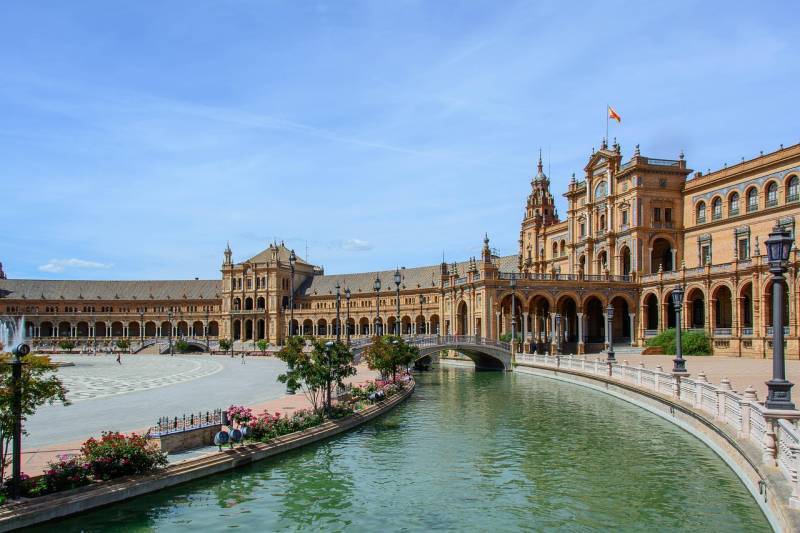
And lastly, preserving Spain’s stunning landmarks is never far from the country’s agenda, especially in Seville where €1.2 million from the central government will restore the coffered ceilings of the iconic Plaza de España’s Puerta de Navarra and Puerta de Aragón.
The tender went out on January 12 and the nine-month job starts in mid-2026. Sub-delegate for the province, Francisco Toscano, called it “an investment aimed at halting the deterioration caused by the passage of time, enhancing the value of this heritage site, and guaranteeing its stability and preservation”.
The project is being led by architect Miguel Ángel López López (so good they named him twice), the conservation whizz behind Seville Cathedral’s restoration, after laser scans and thermography spotted weather damage, leaks, pollution and old build issues in the Plaza de España structures.
Works will include wood consolidation, polychromy (multicoloured painted decoration) recovery, structure reinforcement, roof fixes and clever scaffolding for those lofty ceilings. It’ll keep Aníbal González’s 1929 masterpiece (the visionary behind the whole Plaza de España) shining for years.
You may have missed…
- Read the February edition of Home & Living magazine online now.
You can now read the February issue of Home & Living magazine online without even having to sign up anymore! - Spain faces twin health challenges: Rising cancers and a setback on measles.
Spain is expected to surpass 300,000 new cancer cases for the first time this year, according to the new report Cancer figures in Spain 2026 from the Spanish Society of Medical Oncology (SEOM). - More green spaces, better cultural centres, more connected: These 13 Murcia towns will soon look very different thanks to major new EU funding.
The Spanish Government has given the green light to almost €72 million in funding for a dozen local projects in the Region of Murcia that aim to reshape its towns and cities, improving everything from the environment and the economy to social life and community spaces. - Knee pain can sometimes be a symptom and not an illness itself. Here’s how you can identify and treat it.
Knee pain is one of the most frequent mobility complaints among older adults and as anyone who has ever experienced it can affirm, it can significantly affect independence and quality of life. Technically known as ‘gonalgia’, knee pain can sometimes be a warning sign of other conditions such as ligament or meniscus injuries, inflammation of the tendons or bursae, muscle weakness, or pain related to previous falls or surgeries. - Luxury visitors splash the cash in Spain.
Spain welcomed a record 97 million foreign tourists last year, up 3.5% since 2014, with spending leaping 6.8% to €134.71 billion. A new CaixaBank research report shows how luxury travellers, a mere 3% of arrivals, drive 20% of it all.
There we have it for another week. Thank you for reading all the way to the end once again. We’ll be back with another edition next week.
See you then!